
How to Choose the Right Cold Rolled Coil for Your Project?
Selecting the right Cold Rolled Coil for your project can be challenging. Industry expert John Smith, founder of Metal Solutions, emphasizes, "Understanding the specifics of your project is key to choosing the right material." Cold Rolled Coils are known for their precision and finish, making them popular in various applications.
When assessing your needs, consider the thickness, width, and mechanical properties of the Cold Rolled Coil. Each project is unique, and a one-size-fits-all approach often leads to problems. Quality should never be compromised, yet selecting a suitable supplier can be daunting. Manufacturers differ in their standards and methods.
There is always room for improvement in decision-making processes. Moreover, not every cold rolled coil will suit atypical requirements. Reflecting on past choices can guide future selections. Ultimately, educating yourself about Cold Rolled Coils is essential to avoid costly mistakes in your projects.
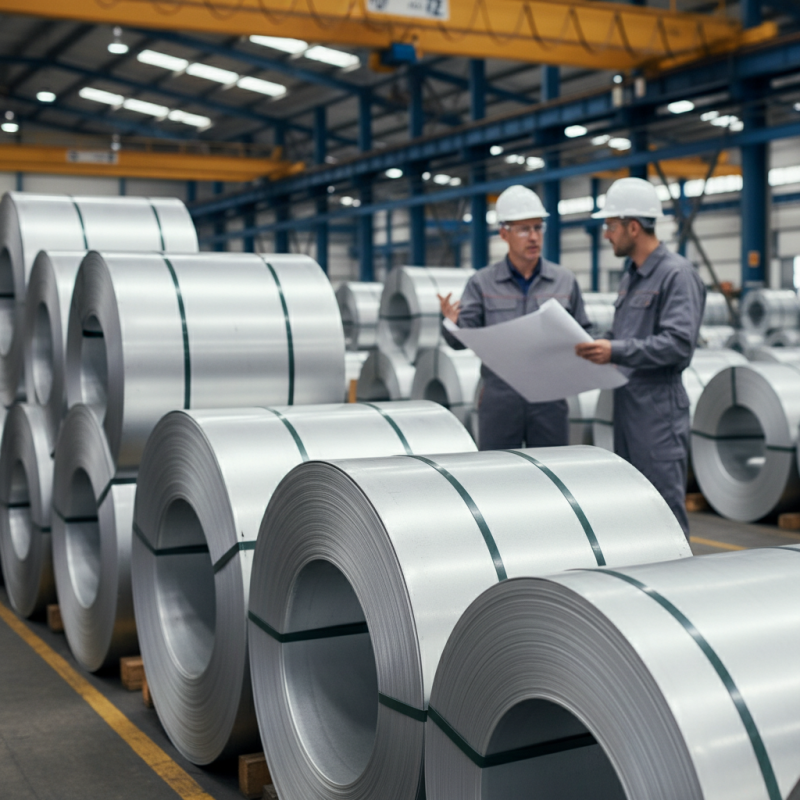
Understanding Cold Rolled Coil Specifications and Grades
When selecting cold rolled coils, understanding specifications and grades is crucial. Cold rolled coils are produced by further processing hot rolled steel. This results in enhanced surface finish and tighter tolerances. Two important standards often referenced are ASTM A1008 and JIS G3141. These specifications detail steel's thickness, yield strength, and tensile strength. For example, the typical yield strength of cold rolled steel can reach over 300 MPa.
It's essential to consider the grade based on your project’s requirements. Different grades offer varying levels of strength and ductility. Common grades include commercial quality and drawing quality. Commercial quality steel is suitable for general use but may not have the best mechanical properties. Drawing quality steel is preferred for applications requiring deep draws. This can come at a higher cost, which may be a factor for your budget.
**Tip:** Always check the certification. Ensuring that your cold rolled coils meet the necessary standards is vital.
Moreover, consider the coil's surface condition. Cold rolled steel can have different finishes, from smooth to textured. A smooth finish is generally better for painting or coating. However, it may not hide imperfections well. A textured surface can disguise minor flaws but may not perform as well for certain applications.
**Tip:** Assess your project's aesthetic requirements while choosing the right surface finish.
How to Choose the Right Cold Rolled Coil for Your Project?
| Specification | Grade | Application | Thickness (mm) | Width (mm) | Yield Strength (MPa) |
|---|---|---|---|---|---|
| ASTM A1008 | SPCC | Automotive parts | 0.8 | 1000 | 210 |
| JIS G3141 | SPCC | Home appliances | 0.6 | 1200 | 205 |
| EN 10130 | DC01 | Construction | 0.5 | 1500 | 190 |
| ASTM AISI | C1008 | Consumer goods | 1.0 | 1000 | 210 |
Evaluating the Mechanical Properties of Cold Rolled Steel
When selecting cold rolled steel, mechanical properties play a crucial role. Steel's strength, ductility, and hardness are key attributes. These factors influence the material's suitability for specific applications. For example, high tensile strength is vital for structural components. It ensures the material can withstand stress without deformation.
Ductility is another important property. It allows the steel to bend without breaking. This is especially desirable in applications where flexibility is crucial. Additionally, hardness influences wear resistance. Harder materials tend to resist abrasion, which is essential in manufacturing tools and machinery.
Testing these properties can be complex. Standard tests include tension, hardness, and impact tests. Results can vary greatly based on processing methods. Understanding these tests is essential for making informed decisions. Companies sometimes overlook these details, resulting in unsuitable material choices. Evaluating properties ensures that the selected coil meets the project's demands effectively.
Assessing Surface Finish and Thickness for Your Project Needs
When choosing cold rolled coils, the surface finish and thickness are critical factors. The surface finish impacts both appearance and functionality. A smoother finish can enhance aesthetics but may require more precise manufacturing processes. In contrast, a rougher finish can mean lower costs but might affect performance in certain applications. For instance, if the coil is for automotive parts, a high-quality finish is essential.
Thickness is another vital consideration. It determines the coil's strength and potential usage. Thicker coils are generally sturdier but may be less flexible. Depending on your project, this could be a disadvantage. For projects needing intricate bends, a thinner coil is preferable. On the flip side, if structural integrity is paramount, thicker options are necessary. Sometimes, manufacturers offer a limited range of thicknesses. This limitation forces you to reconsider your project's requirements.
Assessing both attributes demands careful thought. The chosen surface finish should align with the end-use. Understand the balance between aesthetics and functionality. Similarly, ensure the thickness matches the mechanical demands of your project. Overlooking these aspects may lead to issues later on. It's essential to reflect on your project's specific needs and how these choices impact the overall outcome.
Cold Rolled Coil Surface Finish and Thickness Assessment
This chart displays the thickness of different cold rolled coil surface finishes, helping to assess which might be suitable for various project needs. Selecting the right thickness based on surface finish is crucial for achieving desired performance and quality.
Applications of Cold Rolled Coil in Various Industries
Cold rolled coil finds applications across various industries due to its versatility and durability. In the automotive sector, it serves as a critical material for manufacturing body panels. These coils provide strength while allowing for lightweight designs. They are essential in enhancing fuel efficiency and safety in vehicles.
In the construction industry, cold rolled coils are used in pipes, roofing, and framing. The precision of the coils contributes to the structural integrity of buildings. However, one must consider the environmental impact. The production process can be energy-intensive, and recycling options should be evaluated.
**Tip:** Always assess your project's specific needs before choosing a cold-rolled coil.
In the appliance industry, cold rolled fullfills a vital role in the design of refrigerators and washing machines. It offers a smooth finish, ideal for aesthetic appeal. Yet, selecting the right thickness is crucial. Too thin, and the product may lack durability. Too thick, and it may add unnecessary weight.
**Tip:** Balance strength and weight when selecting the coil.
Cold rolled coils are equally valuable in the electronics sector. They are used in various components, offering both conductivity and protection. Adequate testing is necessary to ensure compatibility with other parts. Factoring in these details will prevent future issues.
**Tip:** Regularly review your supply options to ensure quality and performance.
Cost Factors and Supplier Selection for Cold Rolled Coils
When selecting cold rolled coils, cost factors play a significant role. Pricing can vary widely based on specifications, such as thickness, width, and mechanical properties. For instance, a thicker coil may cost more, but offer better stability for heavy-duty applications. Understanding your project's needs is essential. Whether you require coils for automotive components or appliance manufacturing, knowing the right specifications can help you avoid overspending.
Choosing the right supplier is equally important. Look for suppliers with a strong reputation in the market. Evaluate their quality and delivery timelines. Sometimes, lower prices may indicate lower quality. Ask for samples to assess the material's properties. Don’t hesitate to request references to gauge their reliability. Keep in mind that long-term relationships with suppliers can lead to better deals. However, if you focus solely on cost, you might face issues later in your project.
Ultimately, don’t rush the decision-making process. Take your time to weigh all factors. Reflect on what you need from your cold rolled coils. Balancing cost with quality might be challenging. But this thoughtful approach can lead to better outcomes for your project.