
How to Choose the Right Micro Switch for Your Project?
Choosing the right micro switches for your project can feel overwhelming. There are numerous options available on the market. Each switch has unique features and specifications that may affect your project's success. Micro switches serve various applications, from home appliances to industrial machinery. Understanding your project requirements is crucial.
Consider the environment where these micro switches will be used. Are they for an indoor or outdoor application? The choice may impact performance and durability. It's essential to evaluate factors like actuation force, lifespan, and electrical ratings. Mistakes may occur if you don’t fully consider these elements.
In addition, different designs of micro switches offer varying advantages. A tactile feedback switch may be suitable for user interfaces. Alternatively, a sealed switch might be better for harsh conditions. Assessing your priorities in this way helps ensure you select the most appropriate option. Reflect on your needs, experiment, and learn from any missteps along the way.
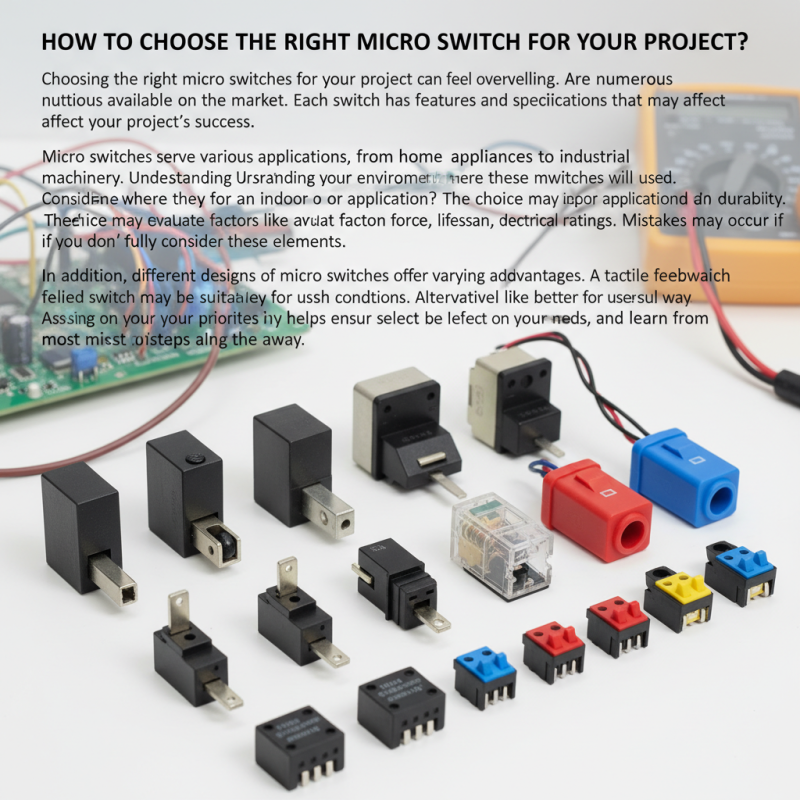
Understanding Micro Switches: Types and Their Applications
Micro switches are crucial components in many electronic devices. They offer precise control over circuit operations. Understanding their types and applications can help in selecting the right one for your project. Various types of micro switches exist, each tailored for specific needs. For instance, momentary micro switches activate upon depression. Latching types remain in one state until switched again. The choice will shape your project's efficiency.
Different applications demand different switch characteristics. According to industry reports, over 60% of manufacturers prefer micro switches in automotive and industrial automation sectors. However, not all switches fit every application. Some need higher ratings for load handling. Others must work in extreme thermal conditions. It’s crucial to assess your device's requirements carefully.
Tips: Always consider the durability of the switch. Many standard micro switches fail in heavy-duty contexts, leading to failures. Opt for models with a rated lifespan suited to your usage. Testing prototypes is key. Micro switches may perform differently under various conditions. Iterative testing can ensure optimal performance. Even with a good product, don’t overlook user feedback during trials.
How to Choose the Right Micro Switch for Your Project? - Understanding Micro Switches: Types and Their Applications
| Type of Micro Switch | Operation Force (grams) | Maximum Current (Amps) | Typical Applications | Actuation Mechanism |
|---|---|---|---|---|
| Standard Micro Switch | 30 | 15 | Home Appliances, Industrial Equipment | Ball or Roller Actuator |
| Subminiature Micro Switch | 25 | 5 | Medical Devices, Security Systems | Miniature Lever |
| Heavy-Duty Micro Switch | 50 | 30 | Automotive, Industrial Machinery | Plunger or Roller Arm |
| Snap Action Micro Switch | 40 | 10 | Elevators, Food Equipment | Snap Action Mechanism |
| Waterproof Micro Switch | 35 | 10 | Outdoor Equipment, Marine | Rubber Sealed Actuator |
Key Specifications to Consider When Selecting Micro Switches
When selecting micro switches for your project, key specifications play a crucial role. The actuation force is one of the first aspects to consider. This force impacts how easily the switch activates. Too high of a force can make it hard to use. Conversely, too low can lead to unintended activations. A careful balance is essential.
Next, the switching life expectancy is important. This tells you how many cycles a switch can handle before it fails. Some applications require switches that can endure thousands of operations. Failing to consider this can result in frequent replacements. It’s worth thinking about the environment, too. Temperature and humidity levels can affect performance.
Contact type also matters, especially for specialized applications. Different types include SPDT and DPDT, influencing circuit configurations. Selecting the wrong type can lead to circuit issues. While these details may seem small, they impact the overall reliability. A thoughtful approach to these specifications can minimize future headaches in your project.
Micro Switch Selection: Key Specifications
Evaluating Ratings: Voltage, Current, and Operating Force Requirements
When choosing a micro switch, evaluating the ratings is crucial. You'll need to consider voltage, current, and operating force. Understanding these parameters can help ensure reliability in your project. Voltage ratings typically range from 5V to 600V. Using a switch with a voltage rating lower than your operating voltage can lead to failure.
Current ratings are equally important. Common values include 5A, 10A, and even higher. Exceeding these ratings can result in excessive heat and eventual failure. A 2020 report by the IEEE indicates that 30% of switch failures are due to incorrect current ratings.
Tips: Always assess your application’s current needs. If in doubt, opt for a switch with a higher rating. Operating force varies too. Some applications need a light touch, while others require more force. A force rating between 50g and 400g is standard. Testing different switches in your prototype phase can help refine your choice.
However, not all switches are created equal. Misjudging any of these ratings can lead to unreliable performance. It's essential to analyze your specific requirements thoroughly. Load swings and environmental factors may influence your decision. So, approach your selection with caution and reflect on each aspect carefully.
The Role of Actuation Mechanisms in Micro Switch Selection
Choosing the right micro switch for your project is crucial. Actuation mechanisms play a key role in this selection. They determine how the switch is operated and can affect the overall functionality. There are different types of actuation mechanisms, including lever, push-button, and roller types. Each type has its advantages based on the application. For example, lever types are excellent for mechanical linkages. They often require less force to operate.
Tips: Consider the working environment. Are there vibrations? High temperatures? Select switches that can handle extreme conditions. Always evaluate the available space. Some mechanisms need more room than others. The fit of the switch is important for effective operation.
The force required to actuate a switch varies by mechanism. Ensure that the chosen switch matches your needs. Misjudging this can lead to poor performance. Think about your design’s user experience. The right actuation method can enhance usability. Test different switches to find the best option. A little experimentation can go a long way.
Industry Standards and Compliance for Micro Switches in Projects
When designing with micro switches, understanding industry standards is vital. These standards ensure reliability and safety in various applications. Companies often overlook this aspect, leading to costly mistakes. Compliance with international standards, such as IEC and UL, can significantly impact performance.
Choosing a micro switch involves more than just electrical specifications. It’s essential to consider environmental factors. For instance, temperature and humidity can affect switch longevity. In projects where switches are exposed to varying conditions, ratings should not be underestimated. Revisiting standards during the design phase can prevent future lack of compliance.
Reflect on the specifics of your project. Are the switches compatible with your control system? This includes checking electrical ratings and mechanical life. Also, consider the tactile feedback if it’s part of user interaction. Focusing on details can enhance functionality, but there’s no one-size-fits-all solution. Each project may reveal new challenges that require continuous evaluation.