Why Choose Plug Valves for Your Industrial Applications?
In the realm of industrial applications, plug valves play a crucial role in fluid control systems. Their design offers unique advantages, particularly in managing high-viscosity fluids and slurries. According to a recent report by MarketsandMarkets, the global valve market is projected to reach $104 billion by 2025, indicating a growing demand for reliable valve solutions. Plug valves, known for their simple operation and tight sealing capabilities, contribute significantly to this trend.
The increasing complexity of industrial processes necessitates robust solutions. Plug valves provide ease of maintenance, allowing for quick disassembly without removing the entire valve from the pipeline. Despite their benefits, some industries remain hesitant. Concerns about wear and potential leakage can lead to doubts regarding their long-term reliability. Yet, when properly maintained, plug valves can outperform many alternatives in efficiency and durability.
Evaluating the right valve type for specific applications is critical. Industrial professionals must rely on data and experience when choosing a valve. Plug valves may not suit every scenario, but their effectiveness in certain conditions is undeniable. Understanding these dynamics can significantly impact operational safety and efficiency in industrial environments.
Advantages of Plug Valves in Industrial Settings
Plug valves are gaining popularity in industrial applications due to their unique advantages. They offer excellent flow control in many environments. For instance, a study from the American Society of Mechanical Engineers (ASME) highlights that plug valves can handle pressures up to 10,000 psi efficiently. This capability makes them ideal for high-pressure systems commonly found in oil and gas industries.
One key benefit of plug valves is their low torque requirement for operation. According to the Flow Control Magazine, this reduces the energy needed for frequent valve operations. Such efficiency is crucial in large-scale industrial settings where prolonged operations can lead to soaring energy costs. Another advantage is their ability to maintain a tight seal. This minimizes leakage and enhances safety, particularly in processes involving hazardous materials.
Tip: Regular maintenance can further improve the reliability of plug valves. Examine seals for wear and ensure that valve operability remains smooth. Another point to consider is their suitability for applications requiring quick shutoff. However, operators must be cautious regarding temperature fluctuations, as extreme changes can affect valve performance. Keeping abreast of your system's specific requirements can mitigate potential issues effectively.
Why Choose Plug Valves for Your Industrial Applications? - Advantages of Plug Valves in Industrial Settings
| Advantage | Description | Application |
|---|---|---|
| Low Pressure Drop | Provides minimal resistance to flow, ensuring efficient performance. | Chemical processing, oil and gas |
| Durability | Resistant to wear and corrosion due to robust materials used. | Water treatment, mining |
| Ease of Maintenance | Simple design allows for quick inspections and repairs. | Manufacturing, HVAC systems |
| Versatility | Effective for various media including gases, liquids, and slurries. | Food processing, pharmaceuticals |
| Compact Size | Space-saving design suitable for limited installation areas. | Tight spaces in industrial plants |
Comparative Analysis of Plug Valves and Other Valve Types
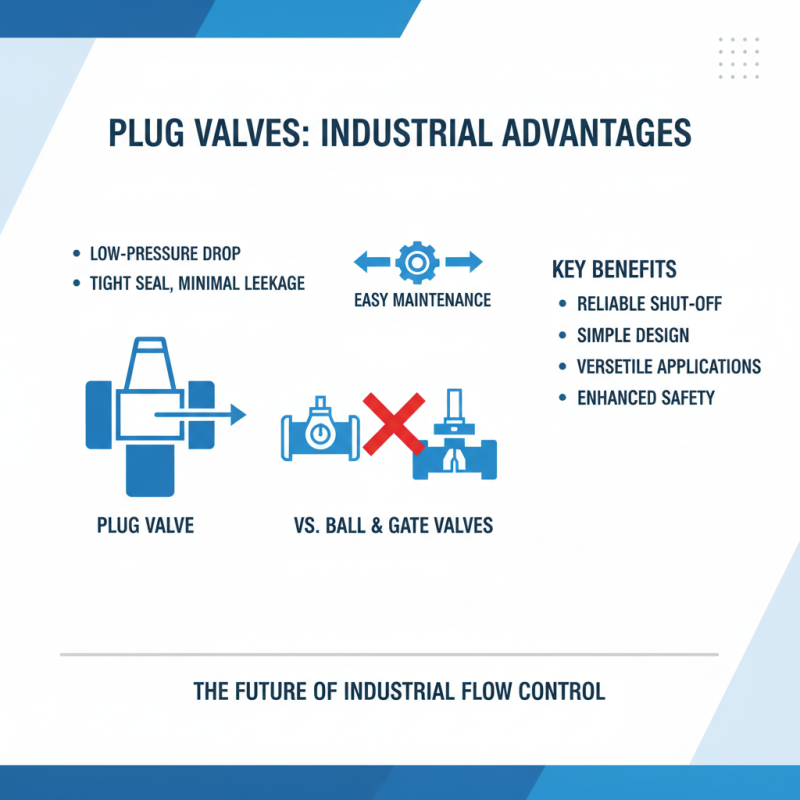
Plug valves are gaining popularity in industrial applications due to their distinct advantages over other valve types. Unlike ball or gate valves, plug valves offer low-pressure drop and reliable sealing. Their simple moving parts allow for easy maintenance and operation in various conditions. Industries favor these valves because they provide a tight seal, minimizing leakage and enhancing safety.
A comparative analysis reveals that plug valves excel in specific applications, especially in handling viscous fluids or slurries. In some cases, they outperform butterfly valves, which can face issues with pressure drop and flow control. However, there are limitations. Plug valves may not be the best for high-temperature applications. Some operators find them complex when troubleshooting. Each valve type has unique design aspects that cater to distinct operational needs.
Understanding your requirements is crucial. Evaluating the fluid characteristics, pressure, and temperature will guide your choice. Plug valves might suit certain environments better than others. A well-thought-out selection ensures optimal performance and longevity.
Applications Where Plug Valves Shine: A Focus on Industry
Plug valves excel in various industrial applications due to their unique design. They provide reliable shut-off capabilities, making them ideal for systems requiring frequent cycling. Their simplified construction facilitates easy maintenance, which is vital in industries where downtime is costly.
One notable application is in the oil and gas sector. Here, plug valves are favored for their ability to handle viscous fluids and high-pressure conditions. The design minimizes turbulence, enhancing flow efficiency. In chemical processing, these valves manage aggressive materials. Their tight seal prevents leaks, protecting both the product and the environment.
Despite their advantages, plug valves do have limitations. They may not perform well in throttling applications, as their flow control is less precise. Maintenance personnel must also ensure proper lubrication to prevent seizing. These factors require careful consideration and reflection to ensure optimal performance in specific applications.
Advantages of Plug Valves in Industrial Applications
Maintenance and Longevity of Plug Valves in Operations
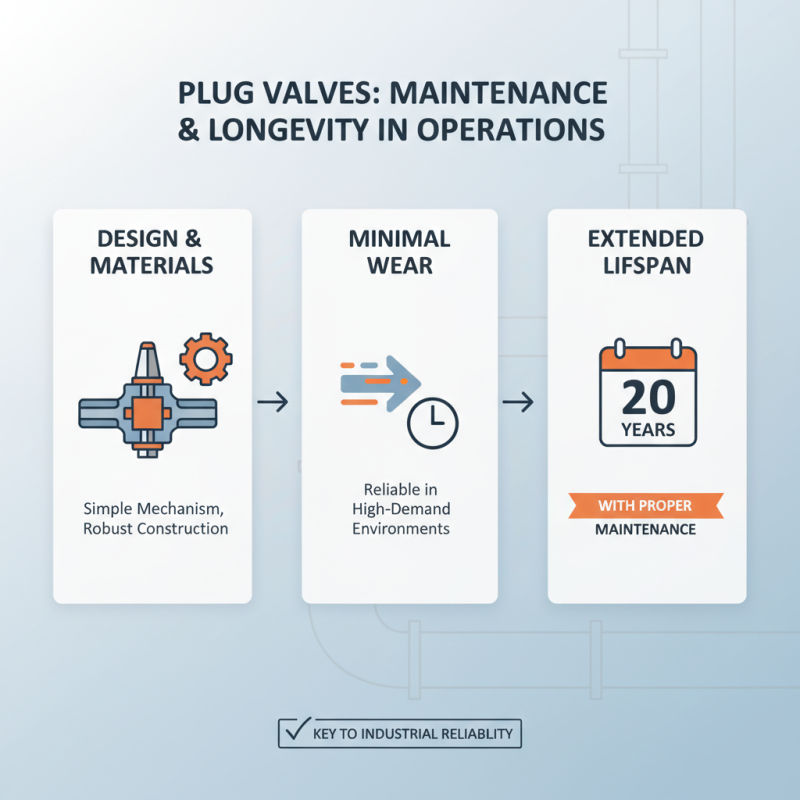
The maintenance and longevity of plug valves in industrial operations largely depend on their design and materials. Plug valves typically feature a cylindrical or tapered plug that can be rotated to control flow. This straightforward mechanism allows for minimal wear over time, which is crucial in high-demand environments. According to industry reports, plug valves can last up to 20 years with proper maintenance.
Regular inspection is essential. Operators should check for corrosion and leakage, which can compromise valve integrity. Data shows that neglecting maintenance can reduce the lifespan of plug valves by as much as 40%. This highlights the need for a proactive maintenance strategy.
Moreover, the choice of materials significantly impacts longevity. Using corrosion-resistant alloys or coatings can further enhance durability. In environments with aggressive chemicals, choosing the right material is critical. Proper training is vital for personnel to recognize when valves need servicing. Even the best valves require attention to avoid unexpected failures. These considerations help maintain operational efficiency and reduce downtime.
Considerations When Selecting Plug Valves for Specific Uses
When selecting plug valves for industrial applications, several factors should be considered. Plug valves are useful in managing flow due to their tight sealing capability. The type of fluid being managed is critical. For instance, abrasive materials may wear down the valve more quickly. Assessing compatibility with the fluid is essential to ensure durability.
Tips: Always check the valve material. It should resist corrosion if dealing with chemicals. This extends the valve's lifespan significantly.
Another aspect to consider is the operational environment. Temperature and pressure conditions greatly influence valve selection. Elevated temperatures might require specially designed valves to prevent failure. Understanding how the valve will perform under specific conditions is vital.
Tips: Regular maintenance can reveal potential issues early. This helps avoid unexpected failures that can disrupt operations.
Lastly, consider the installation space. Plug valves come in various sizes. Ensuring the correct fit is crucial for effective operation. A valve that is too large or small can lead to inefficiencies.
Making informed choices in plug valve selection involves assessing fluid properties, operational conditions, and installation requirements.
Related Posts
-
The Ultimate Guide to Choosing the Right Stainless Steel Ball Valve for Your Industrial Needs
-
Discover Top Quality Electric Valves from Leading Manufacturers in China
-
Top 10 Motorized Valves: Best Options for Efficiency and Control
-
How to Choose the Right Ball Check Valve for Your Industrial Needs
-
Top Strategies for Enhancing Efficiency with Pneumatic Valves in Industrial Applications
-
How to Select the Best Pneumatic Valve for Your Industrial Applications